Sentimental memories, folk tales, grandmothers’ treasures, and above all, solid, traditional craftsmanship have become the object of interest of furniture and interior accessories designers. However, furniture and accessories inspired by folklore are not limited to repeating the motif. Reference to folklore becomes a pretext for creating new, local legends. It is also certainly the effect of the trend of dialogue between modernity and tradition, which has been ongoing for several years. With the growth of globalization and the blurring of previous state borders, population migration, travel from continent to continent, the need to emphasize cultural identity and promote it is becoming stronger in parallel. This cultural difference is certainly interesting for representatives of other areas, it is also interesting for us, because it is related to memories and refers to the activities of our ancestors. The marriage of old and new is a very common element in design today, dusting off new patterns and reaching for historical elements, old technologies enjoys constant interest. In the world of design, there has been a noticeable shift in thinking towards using natural materials, the knowledge of craftsmen and hand-made objects for a long time. What counts is the quality and aesthetic value of the materials used – their natural texture. What we know from our close surroundings can also be attractive. What is “ours” is more understandable to us. Local wealth deserves more attention. Our company, located on the edge of two regions: Żuławy and Warmia and Mazury, draws on the rich design traditions of the progenitors of these lands. For example, traditional relics of the old regional carpentry of Masuria are primarily dowry chests, wardrobes, sideboards, a four-poster bed, wedding tables, a combination of a bench and a chest, cradles, stools, armchairs and chairs, which can be admired, for example, in the Masurian Museum in Szczytno. Chests, wardrobes, and sideboards are decorated with figurative paintings, carvings with plant and geometric motifs, enclosed in square or rhomboidal fields surrounded by profiled strips. On the inside of the door, you can find notes made there by the hosts about important events in the family and the farm. The beauty of other furniture, such as tables, chairs, and benches, is determined by fanciful carvings, cutouts, and profiling of construction elements, such as legs, backrests, seats, or tabletops. At the turn of the 19th and 20th centuries, furniture production in rural workshops slowly ceased, as industrial production began to replace them. In the 1920s, they were already a great rarity.
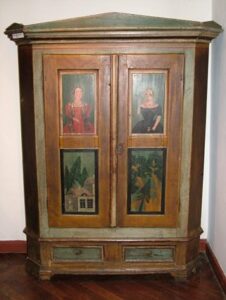
Painted wardrobe from the collection of the Masurian Museum in Szczytno
Similarly in Żuławy – a specific element of a Żuławy house was furniture, which in some cases created a structural whole with it. Such were, for example, corner cabinets. Sometimes the shelves in the corner were obscured by doors hanging outside. In the wall between the large room and the black kitchen, there were wall cabinets and sideboards, e.g. in Markus 13, bedding closets were built into the partition walls of rooms on the first floor, e.g. a house in Żuławki or Orłowo – Kolonia. Sometimes in shorter houses, on the utility wall of the hall, a row of doors opened not into rooms, but into wardrobes. Built-in wardrobes were also sometimes placed in the bends of stairs or under roof slopes. The casings of the entrances to the basement could also have the shape of a wardrobe
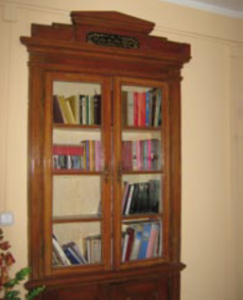
Wall sideboard of the arcade house in Nowa Kościelnica.
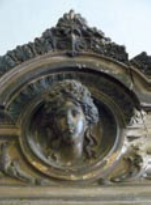
Medallion with a woman’s head from the furnace in Palczewo.
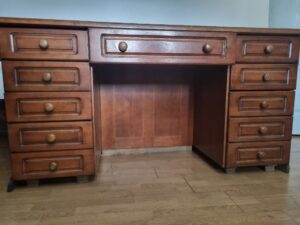
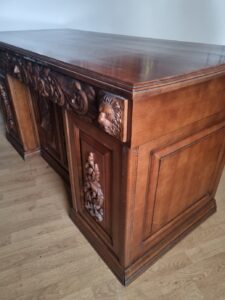
Traditional furniture, translated into a modern design language, can provide unique products, different from those that reach us from everywhere. It is pleasing that these are less and less literal references, and more and more often you can see high-quality products using traditional techniques or materials, based on deeper research. Thanks to the implementation of the project “Continuation of carpentry traditions as a way to increase the competitiveness of the “Mundo Cocinas” company” under the Regional Operational Program Warmia and Mazury for the years 2014-2020, activity 1.5.2 Recreating the economic heritage of the region, our company has implemented furniture modeled on traditional Warmian furniture to its current product offer. The new product offer includes traditional 19th-century Warmian living room and office furniture modeled on the style, design and colors of the Warmia and Mazury region, manufactured primarily from natural materials such as wood and natural veneer.
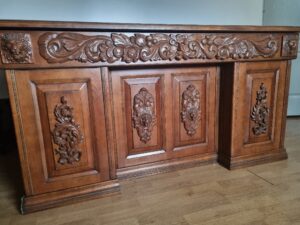
Desk with carved motifs